Ask a Tulsa property manager what holds up a turnover, and the answer is most often not the cleaning crew or the painter. It’s the refrigerator that hasn’t arrived, the flooring carton sitting at a different property, or the closet rod nobody remembered to buy.
Close to half of Tulsa households rent, so those small delays repeat across a lot of doors every year. Almost all of them come down to one mundane question: where does the stuff live between jobs?
This guide to property manager storage in Tulsa, OK, covers four things:
- What to take off-site and what to leave where it is
- How to prepare appliances and flooring so they come out the way they went in
- How to size a unit for a real portfolio instead of guessing
- What Oklahoma law says about property tenants leave behind
What a Sitting Vacancy Actually Costs
The Census Bureau’s QuickFacts page for Tulsa puts median gross rent at $1,052 for 2020 through 2024 and the owner-occupied housing rate at 51.9 percent. It’s a citywide figure, and gross rent includes utilities, so your own doors may run higher or lower, but the math is revealing:
- $1,052 divided by thirty days comes to roughly $35 a day in rent.
- Five extra vacant days per turnover is about $175 per unit.
- Over 20 turnovers a year, that’s about $3,500 in rent that never arrives, not counting extra trips and rush deliveries.
The usual suspects are materials, appliances waiting to be installed or hauled away, staging furniture, and tenant possessions that need to be moved out before the next tenants arrive, all competing for the same scarce space.
Three Kinds of Inventory, Three Different Sets of Habits
Appliances, flooring, and small consumables tend to get lumped into one conversation, but they behave very differently after months in storage. Treating them as one pile is how a carton of planks ends up under a refrigerator.
Landlord Appliance Storage in Tulsa: Upright, Clean, and Dry
A spare refrigerator is the most demanding thing most managers will keep. The key is a few simple steps:
- Unplug it and defrost it completely.
- Dry all surfaces and removable parts before putting it in.
- Leave the doors slightly open so air can circulate.
- Keep it upright, and never stack anything on top.
- Confirm the facility allows refrigerator storage before you reserve.
When it comes to landlord appliance storage in Tulsa, a few habits count beyond the fridge. Keep the warranty paperwork, model number, and serial number in the same folder as the appliance, or warranty claims turn into a hassle. Photograph each piece when it arrives, since suppliers often want damage reported within a short window. And standardize on a limited range of models across your properties, so one spare can fit multiple doors instead of you holding six one-offs.
Flooring Stock Storage in Tulsa: Flat, Supported, and Matched by Lot
Planks and tile cartons look tough and aren’t.
- Store cartons horizontally on a raised surface like a pallet, supported all the way across.
- Keep them in the original packaging and away from outside walls.
- Don’t lean them against a wall or put heavy items on top unless the manufacturer says otherwise.
- Follow the manufacturer’s acclimation requirements, since they vary from product to product.
What makes flooring stock storage in Tulsa worth doing deliberately is the leftover material. After a renovation, the extra cartons are the only guaranteed match for the lot that went down, so a repair three years later doesn’t turn into a mismatched patch. Label each carton with the property address, install date, and the lot number from the box label, and don’t mix leftovers with other products.
Tenant Turnover Supply Storage in Oklahoma: The Small Stuff That Stalls Everything
The expensive items get the attention, but the cheap ones cause most of the delays. A unit can be painted, floored, and cleaned and still sit empty because nobody had a matching cabinet pull or the right size furnace filter on hand.
A good turnover stockroom is built on shelving and labeled bins, organized by the type of repair. It typically includes:
- Touch-up paint, labeled by property, room, and sheen
- Spare keys, rekey supplies, and door hardware
- Light fixtures, smoke detector batteries, and blinds
- Furnace filters and parts for basic plumbing repairs
Ask about paint and cleaning chemicals first, since rental agreements often prohibit flammable and hazardous materials.
Where Can a Tulsa Property Manager Store Replacement Appliances Between Units?
There are four common places, and each has trade-offs that are easy to overlook until you’ve lived with them.
- The maintenance shop or someone’s garage: It’s free and close, but it fills up fast, mixes your stock with personal belongings, and tends to run on one person’s memory.
- A vacant rental unit: It costs nothing extra, but it’s a unit that could be earning rent, and appliances sitting in an empty house are an easy target.
- A portable container delivered to the property: It works well at one big complex, but not when your doors are spread across Tulsa County.
- Off-site self-storage in a central location: It gives you one controlled stockroom for every property, at the price of a short drive.
Managers with multiple single-family homes and small multi-family buildings usually find it easier to keep stock in one central location, since every crew goes to the same place for the same inventory. A manager with one large community may prefer an on-site container, and nothing stops anyone from using both.
The logic mirrors what Tulsa online sellers have discovered about micro-warehouse strategies, where a small, well-organized space close to the work beats a big one far away.
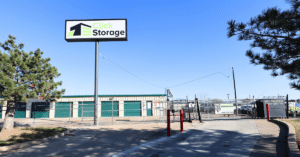
Click Storage’s commercial self-storage is geared toward this type of business use, and our guide to business storage in Tulsa explains the bigger picture. Either way, treat commercial storage in Tulsa as a line item in the operating budget, not a place where things go to be forgotten.
What Size Storage Unit Works for a Property Management Company?
It depends on the number of doors you manage and how much renovation work you do, but there’s a way to get close without guessing.
Count Footprints First
List what you actually keep in stock, then count the floor space. A refrigerator typically needs about three feet of width and nearly as much depth, so plan for roughly six to nine square feet each, and a range or washer needs a bit less. Flooring cartons are long, often four to six feet, so a unit at least ten feet deep handles them without awkward angles. Keep a walk-through aisle on one side, because a stockroom you can’t walk through is a stockroom nobody uses.
Starting Points by Portfolio Size
These are guidelines, not guarantees, so ask to see the space before committing.
- Up to about twenty-five doors: A 5×10 or 10×10 will hold a few spare appliances, a rack of materials, and a roll of extra flooring from the last job.
- Roughly twenty-five to seventy-five doors: A 10×15 or 10×20 gives you room for appliances and fixtures on one side and flooring cartons on a pallet on the other.
- Larger portfolios or extensive renovation plans: Separate appliances and fixtures from flooring and building materials, and keep two units, so crews aren’t digging through the entire stock for one carton.
Rent one size larger than your first instinct when flooring is involved, since stacking cartons high is the quickest way to crush the bottom row. The storage size guide can help you picture what fits in each unit, and it’s worth asking whether you can move up or down a size as the portfolio changes.
When a Tenant Leaves Things Behind
Storage and turnover collide hardest when a tenant moves out and leaves belongings in the unit. Oklahoma has a specific rule for this in Title 41, Section 130, and it’s worth knowing before anyone starts hauling things to the curb.
What Section 130 Requires
- If the property has no apparent value, the landlord can dispose of it without liability, and perishables can be handled as the landlord sees fit.
- If the property is clearly valuable, the landlord must send written notice by certified mail to the tenant’s last known address, stating the property will be considered abandoned if it isn’t removed by the date in the notice.
- Once that date passes without the tenant claiming the property, it’s considered abandoned and may be disposed of in any reasonable way.
- Until then, the landlord should keep it safe and take reasonable care of it.
- If the landlord keeps the property in the vacated unit, the charge is generally limited to fair rental value. If it’s moved to a commercial storage company, actual storage and removal costs may be recoverable.
- A landlord who intentionally or negligently violates these rules can be liable for actual damages.
That’s the practical case for a rented unit. Items left behind can go into a separate, labeled space, along with a photo of the items, a copy of the certified mail receipt, and a note of the date the clock started.
The Security Deposit Clock
The deposit follows its own schedule under Section 115, which gives the landlord 45 days to return the remaining deposit after the tenancy ends, possession is delivered (for example, the keys are returned), and the tenant requests the deposit in writing.
Any deductions have to be itemized in a written statement, mailed with return receipt requested or delivered in person. This is a general summary, not legal advice, so consult a landlord-tenant attorney for a specific situation.
Buying in Bulk Without Burying Yourself
Bulk pricing sounds like a good idea when you have a place to store things. Buying filters, smoke detectors, and paint by the case usually does cut the per-unit cost, and a stockroom makes it possible. The trap is overbuying items that change.
A pallet of one type of flooring is a good deal until the owner wants to replace every kitchen, and a dozen of the same light fixture is a liability once the style is discontinued. A good rule of thumb is to buy in bulk for consumables that stay the same, and buy by project for anything with a color, a pattern, or a model number.
One trick that costs nothing is to build ready-to-go kits for the repairs you see most. A bag with the parts for a standard faucet replacement, or a bin with a lockset, two keys, and the right screws, saves a trip every time a crew gets the same call. Label each kit with what it fits and which properties use it, and the person grabbing it at seven in the morning doesn’t need to ask anyone anything.
Timing matters too. Appliances and special-order flooring can take weeks to arrive, while paint and hardware show up in a day, so the stockroom should hold the slow items and let the fast ones come from the store.
Letting Crews In Without Losing Track
The best-stocked unit in Tulsa isn’t much good if only one person can open it. Crews work early in the morning, late at night, and on weekends, so the access list should reflect that.
Giving a contractor a gate code is easy, and getting it back is the part people forget. Before signing, check with the facility on a few things:
- How to add and remove additional users
- What happens to a code when a vendor stops doing business with you
- Whether access hours match the early starts and late finishes your crews keep
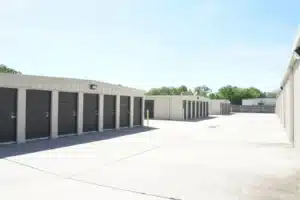
- Whether a drive-up unit is available, since carrying a range down a hallway is no one’s idea of a good morning
The lock helps, but so does a small sign-out habit. A whiteboard in the truck or a text to the unit’s owner works, as long as it happens every time. If the log shows three smoke detectors went to the Mingo Road duplex, there’s no question where they ended up.
Running the Unit Like a Stockroom, Not a Closet
A rented unit only helps when someone treats it as inventory. The system is generally simpler than it sounds:
- A simple log in a shared spreadsheet that records what went in, which property it’s for, and when it left
- A reorder point for low-cost, high-use items, to prevent panic buying when the last box of filters runs out
- A clear list of who has access to the unit, including vendors, and one named owner
- Photos of the shelves every few months, so missing items turn up sooner than a gut feeling would catch them
Old appliances waiting for haul-away should have their own corner. Mixing them with new stock is how a dented dishwasher gets installed by mistake, so mark the pickup area clearly and set a limit on how long anything waits there. If your waste hauler picks up every other week, the unit shouldn’t be where old refrigerators spend the winter.
Owner accounting deserves a thought too. If a spare range was bought for one owner’s building, the management agreement should say how its cost and its share of the unit rent get charged back, because storage that quietly leaks across owners becomes an awkward conversation at year-end.
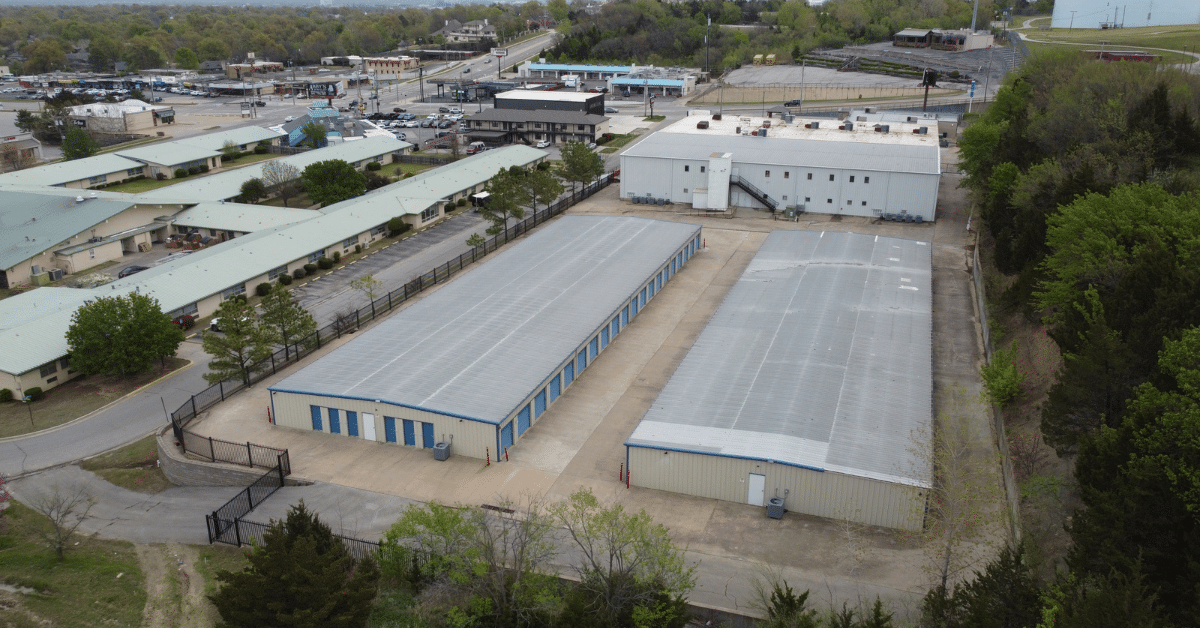
The next time a unit turns over, notice where the appliance, the flooring, and the paint actually are at nine in the morning. If any of them are in a truck, a garage, or another tenant’s hallway, that’s the first thing to move. A small unit set up as a proper property manager storage stockroom through Click Storage in Tulsa can take that off your plate.
FAQs
Is it better to stock replacement appliances ahead of time or order them as needed?
Stocking one or two of your most common models is often cheaper than scrambling, since a refrigerator or range that fails mid-lease needs a fast fix. Order everything else on demand, so cash and floor space aren’t tied up in slow-moving inventory.
Can I store paint and cleaning chemicals in a storage unit?
Many facilities restrict flammable, hazardous, or chemical products in their rental agreements, and policies vary. Don’t move anything like that in without asking, and get the answer in writing so there’s no confusion later.
Can a property management company rent a unit instead of an individual?
Business accounts are common, and commercial storage is designed for this kind of use, but paperwork and billing vary between facilities. Ask the office how they set up a company account, and whether more than one person can be added for access to the unit.