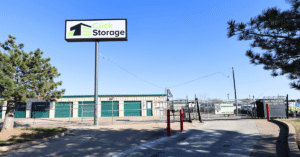
They need to keep overhead manageable, and as online sales grow, most sellers realize they need a practical system for inventory, returns, and order fulfillment, without locking themselves into a years-long commercial lease too early. That’s where micro-warehouse units in Tulsa come in.
Many online sellers find that early growth gets messy fast. Inventory starts out in a garage or spare room, and that works fine at first. But once product volume expands, workflows start to break down as boxes pile up and returns get mixed in with sellable stock. That’s usually the moment to rent a micro-warehouse nearby.
This guide walks through how to build a micro-warehouse strategy for your e-commerce brand in Tulsa. We’ll also cover storage unit vs. warehouse for online sellers, and how the two options differ, so you can make a decision that supports your brand’s growth.
Why Tulsa E-Commerce Brands Need a Different Storage Model
Online retail isn’t static. Product demand shifts with the seasons and ad campaigns, platform trends change, and customer behavior shifts right along with them. A brand that needs room for a few dozen units this month could see that number multiply overnight if a product goes viral the next. If storage can’t adapt just as quickly, growth slows down with it.
That’s why it’s worth thinking beyond a home office for bulk inventory, even though a large warehouse can feel excessive while sales are still growing. Tulsa’s e-commerce brands need a model that adjusts with them: a storage environment that supports growth without locking them into more space than they can actually use.
If you want reliable inventory storage for your online business in Tulsa, the simplest strategy is renting a micro-warehouse. Instead of managing products in a scattered way across your home or multiple locations, you can centralize stocking and returns in a single place.
What a Micro-Warehouse Actually Is
A micro-warehouse is a smaller-scale operational storage space built to support e-commerce activity. It’s not just a place to stash extra boxes. Think of it as a working environment where you store inventory, pack orders, inspect returns, and prepare shipments, a practical solution to warehousing problems without the overhead of an actual warehouse.
A well-set-up micro-warehouse includes product shelves and organized stock zones, along with packing tables or folding stations, boxes, tape, labels, shipping supplies, a space for inspecting returns, and room for seasonal stock. You can also set aside dedicated space for your top-selling products. The goal isn’t to replicate a giant warehouse in miniature. It’s to build an efficient, right-sized system that fits the scale of a still-growing business in Tulsa.
The Limits of Home-Based Storage
Many sellers start with home storage because it’s low-cost and convenient. If you already have a garage, storage costs next to nothing at first. But as orders grow, a home office often starts absorbing too many business functions. Once inventory creeps into bedrooms and packaging materials take over closets, problems start showing up:
- Counting inventory accurately becomes difficult
- Fulfillment slows down because products are spread across too many areas
- The line between personal life and business operations gets blurry
- Maintaining a consistent workflow becomes hard in a crowded home environment
- Employees may not know where items belong, which can affect the customer experience
A micro-warehouse gives the business a cleaner structure and a more reliable operating base.
Inventory Storage for Online Businesses in Tulsa
Inventory storage works best when it’s built around categories, movement, and accessibility, not treated as one uniform pile. Stock usually falls into categories like high-demand products, slow-moving items, seasonal materials, and reserve stock, and each one deserves its own place in the system. A smart inventory layout for secure self-storage in Tulsa generally looks like this:
- Fast-moving items near the front or at waist height
- Backup stock on upper shelving or in deeper rows
- Seasonal products grouped by campaign or quarter
- Fragile items separated from heavy items
- Overstock stored in clearly labeled bins
- Damaged or unsellable stock isolated from active inventory
This arrangement reduces confusion and helps staff locate products without wasting time. It also improves picking accuracy and lowers the odds of fulfillment mistakes, which means fewer lost items, less over-ordering, and fewer shipping errors. It supports product visibility too, since items no longer stay hidden behind random boxes or mixed in with unrelated supplies. Clear bins, organized shelving, and a basic map of the space can meaningfully improve overall performance.
Returns Storage in Tulsa and the Reverse Logistics Problem
Returns are one of the most overlooked parts of e-commerce. Many sellers focus heavily on getting products out the door and forget to build a system for what comes back. Returns eat up time, space, and money, so they need to be handled in a disciplined way. Returns storage in Tulsa should function as its own process, not a side pile. Put returned items into a separate zone and sort them into categories like:
- Restockable
- Needs inspection
- Requires repackaging
- Damaged and unsellable
- Return-to-vendor
- Discount or liquidation stock
This separation helps avoid the operational clutter that returns tend to create. Mix them into active inventory, and you risk shipping the wrong item or miscounting stock. A micro-warehouse keeps the returns workflow clean and contained, and it also improves customer service, since returned items become much easier to locate when responding to a buyer’s complaint.
Fulfillment Storage in Tulsa and the Shipping Workflow
Fulfillment storage is about building a short, logical, repeatable path from stored inventory to a packed order, so shipments get processed quickly and consistently. That setup should include a packing station, a clear picking path, printed or digital order sheets, a designated spot for completed shipments, and a section for outgoing courier pickups or drop-offs.
The goal is reducing motion and wasted time. Pickers shouldn’t have to walk back and forth across a cluttered space. If supplies aren’t easy to find, shipping slows down, and if orders aren’t staged properly, mistakes happen. A well-run micro-warehouse keeps the entire operation organized instead of feeling like a daily scramble.
Can an E-Commerce Business Use a Storage Unit in Tulsa?
Yes, as long as the specific facility allows commercial use. An e-commerce startup can absolutely use a storage unit, and for small or midsize online sellers, that’s often the best way to manage stock, returns, and order prep without signing a major lease. What matters most is how the unit gets used. It won’t just hold boxes. It becomes a working warehouse for your inventory.
Set up clear inventory zones, a packing area, a returns area, and a system for tracking what’s coming in and going out. This approach works especially well for sellers testing a new product line or launching a new brand. Renting business storage in Tulsa, OK, gives a business enough room to operate while keeping financial commitments manageable.
Storage Unit vs. Warehouse for Online Sellers
What actually separates a traditional storage unit from a real warehouse for online sellers? It mostly comes down to scale, infrastructure, and flexibility. A storage unit is usually smaller and cheaper, and you can start using one right away. A warehouse is larger and more expensive, and generally makes more sense for a business with high volume or a larger team.
For a small Tulsa-based e-commerce brand, renting a storage unit is a smarter first step. It lets a company grow into its logistics model instead of overbuilding too early, which protects cash flow and reduces operational risk.
How to Design a Micro-Warehouse Layout
More small businesses have started renting storage facilities across Tulsa as local e-commerce activity grows. Before investing in commercial storage space, it’s worth realizing how much the layout of that space affects how useful it becomes. Even a small space can work extremely well when it’s arranged with purpose. Keep this core principle in mind: the unit should be designed around your workflow, not just your storage volume. Consider a layout like this:
- Front zone: fast-moving products and active orders
- Middle zone: general inventory and seasonal stock
- Side zone: packing supplies and shipping materials
- Back zone: returns, reserve stock, and slower-moving items
- A small desk or table area if packing happens on-site
If shelving is available, use it to make the most of vertical space. Stacking products directly on the floor should be reserved for certain items only. Shelves make it much easier to see stock levels and prevent damage. Clear containers add a quick visual reference too. Set up this way, a business can pull products, stage orders, inspect returns, and stay organized around the clock.
Inventory Systems That Actually Work
An organized space only helps if the business actually knows what’s inside it. The inventory system matters a great deal, and even a simple spreadsheet works fine as long as it stays updated consistently. Accuracy is what really matters here. A strong inventory system should track:
- Product name
- SKU or item code
- Quantity on hand
- Location in the space
- Reorder point
- Condition status, if applicable
- Return status for damaged or pending items
Some businesses use barcodes or inventory apps, while others rely on SKUs and manual tracking. The tool itself matters less than the discipline behind using it consistently. When inventory records stay current and accurate, a micro-warehouse becomes far easier to manage. Regular cycle counts help too, so plan to check small sections of stock every week or month to stay informed.
Returns Management as a Business Advantage
Many sellers think of returns purely as a burden, but a good system can turn them into a source of real efficiency. Sort returns right away and log them properly, and the whole process becomes far less stressful for the team. A well-designed returns workflow should stop items from taking over the warehouse while also helping the business understand why customers are sending products back. A solid e-commerce storage workflow in Tulsa, OK, might look like this:
- Receive the package containing the returned item
- Log the reason the item was returned
- Inspect the condition of the returned item
- Decide whether to restock, repair, discount, or discard it
- Update internal inventory records
- Store approved items back in active stock
Fulfillment Speed and Customer Experience
Fulfillment speed is a core part of the overall brand experience in e-commerce. Customers want their orders processed accurately and on time, and when a micro-warehouse helps a Tulsa-based seller ship faster, that usually translates into better reviews and more repeat purchases.
Speed doesn’t mean rushing, though. It means cutting out unnecessary steps. A well-organized warehouse shortens the time between order receipt and shipment, since products are easy to find, packing supplies stay close by, and the shipping process itself stays standardized. That edge matters even more for brands competing in crowded categories.
Storage Organization Tips for Tulsa Sellers
Renting micro-warehouse storage in Tulsa only pays off if everything stays organized. A few practical habits, simple on their own, add up to real structure and make a micro-warehouse far easier to manage:
- Keep packing supplies in one dedicated zone
- Use color coding for categories or product groups
- Label everything clearly on multiple sides
- Store fragile items separately from bulk stock
- Put frequently sold products closest to the work area
- Keep a clear path for moving orders and bins
- Review inventory regularly so stock doesn’t drift out of sync
- Separate active stock from returns immediately
When a Micro-Warehouse Is the Right Fit
This model works best once a business has outgrown home storage but isn’t ready for a full warehouse operation. It suits businesses in a transition period, whether that means testing a new market, scaling paid traffic, or preparing for holiday demand. A micro-warehouse gives a company room to adapt without a huge commitment. It’s a great fit for sellers who:
- Need more organization
- Want to improve shipping efficiency
- Handle moderate inventory volume
- Deal with regular returns
- Need room for seasonal or reserve stock
- Want to keep costs flexible
Get a Micro-Warehouse for Your Tulsa-Based E-Commerce Setup
A micro-warehouse strategy can be a smart, flexible answer for Tulsa e-commerce brands that need better inventory storage, cleaner returns handling, and more efficient fulfillment without signing a lease too early. It brings real structure to the chaos of online selling and gives a business an operational base without unnecessary overhead.
For brands looking for e-commerce storage in Tulsa, OK, the best setup supports daily workflow, protects inventory, and keeps the business ready for growth. When inventory storage, returns storage, and fulfillment storage all work together in one organized system, the result is a leaner business that can scale with real confidence.