Everybody who has owned an old walnut dresser knows the drawer that sticks in August and rattles in January. That isn’t a flaw. The wood is simply breathing, swelling a little when the air turns heavy and shrinking when it dries out, as it has for the past century.
That’s also why antiques and ordinary storage need a little extra thought. A piece that has settled into one home can be stressed by a single bad season somewhere else. Cracked panels, curling veneer, and cloudy finish are rarely caused by one dramatic event. They accumulate slowly.
Whether you’ve inherited some old furniture, have more furniture than rooms, or are stuck between a downsize and a future home, this antique furniture storage guide for Broken Arrow, OK, is for you. It explains why old wood behaves the way it does, how to prepare each piece, and what a good setup looks like from the first day through the second winter.
Why Old Wood Keeps Moving
A tree trunk is full of tiny tubes that carried water for years, and cut wood never forgets that role. It still trades moisture with the air around it, which is the source of nearly every storage problem you’ll run into. Understanding the mechanics makes the packing advice feel less like a list of rules.
The Direction Wood Moves
Boards change only slightly in length but significantly in width. A solid tabletop, drawer front, or wide side panel can swell or shrink by a noticeable amount over a year, so the joinery around it needs some give. If it doesn’t have any, the wood can split or a joint can open.
Antique makers often allowed for movement with clever fastenings, and a 100-year-old piece has likely lived through plenty of seasons without trouble. The risk comes when conditions change faster or farther than its joinery was designed to handle.
Where Veneer Gets Into Trouble
Veneer is a thin layer of decorative wood glued over a more stable core, and many fine antiques use it. Older pieces were usually glued with animal hide glue, which can be excellent but can soften in high humidity and pull apart at edges where the layers expand at different rates.
This is why veneer storage in Oklahoma deserves special attention. A small moisture event is often the source of a bubble on a dresser top or a corner that lifts at a drawer edge, and it spreads from there. It’s much easier to catch early than to repair later.
A Quick Triage Before Anything Gets Wrapped
Before a single blanket comes out, walk around each piece with a flashlight and a notebook. The aim is to record its current condition, so you have a baseline to compare against later.
- Run a light hand over veneered surfaces and note any hollow sounds or raised spots.
- Inspect all joints for gaps, and check drawer runners for rough, dry wear.
- Note any cracks and photograph each one from two directions, with dates.
- Look for small pinhead holes or powdery dust, which may indicate an active wood borer infestation.
- Smell the piece, since a musty odor means it was damp before it ever reached storage.
The insect check matters a great deal and isn’t as widely known as it should be. If a piece is infested, have a professional treat it before it goes anywhere near other furniture. Damp pieces should dry slowly in a stable room instead of being sealed up and taken straight to a unit.
Does Antique Wood Furniture Need Climate-Controlled Storage in Oklahoma?
For most true antiques, the best protection you can buy is a stable environment. Wood doesn’t care about weather forecasts. It reacts to swings in moisture and temperature, and the bigger the swing, the greater the stress.
A typical drive-up unit follows the seasons outside. It bakes through the long summer, soaks up the humid spells, and cools off quickly when winter arrives, and so does the furniture inside. A conditioned space narrows that range, giving glue joints, veneer, and finishes a much quieter life.
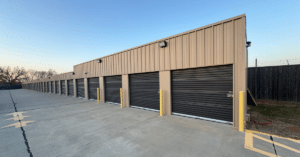
Conservators commonly aim for roughly 35 to 55 percent relative humidity, with rapid swings being the biggest concern. That’s a handy benchmark to use when asking about climate-controlled storage in Broken Arrow. Click Storage’s climate-controlled storage page lays out what’s offered, and it pays to ask which locations have conditioned units and how the humidity is actually monitored.
Valuable, veneered, inlaid, and shellac-finished pieces are the best candidates for conditioned space. A light-finished pine bench headed for a few months of storage is more forgiving.
How to Prevent Antique Furniture From Warping in a Storage Unit
Warping is a slow story about uneven moisture. One side of a board absorbs or releases water faster than the other, and the wood bends toward the drier side. Prevention is mostly about letting every surface experience the same conditions.
Give Every Piece Breathing Room
Lift furniture off concrete floors with wooden pallets or heavy blocks, since slabs can conduct moisture upward. Keep pieces 2 to 3 inches from the walls so air can flow around every side.
Avoid overpacking the unit. A tight wall of furniture creates pockets of still air, and still air is where damp and mildew thrive.
Wrap It Like a Living Thing
Plastic wrap is protective, but it also holds moisture against the finish and can leave marks on soft surfaces. Use cotton sheets, clean moving blankets, or unbleached muslin instead. They guard against dust and scratches while letting the wood ventilate.
Don’t put tape on the furniture itself. Use soft ties, or tape the fabric to itself, to hold the wrapping in place. Cardboard corner guards help at the corners most likely to get bumped during loading.
Handle Drawers, Leaves, and Tops With Care
Take out loose drawers and slide each one back into its own opening with soft paper padding, so nothing can slide open. Remove table leaves and transport them individually, on edge and protected on both sides. Heavy stone or glass tops should travel separately from the base, with help, and rest on a padded surface.
Don’t take apart glued joints or remove original hardware or screws. Dismantling an antique without a clear reason is more likely to cause damage than prevent it, and many period pieces were never meant to come apart.
Finish Care: Where Beauty Gets Lost
The first step in good antique finish damage prevention in Broken Arrow is knowing what you’re protecting. Old furniture may be coated in shellac, wax, varnish, or lacquer, and each responds differently to heat, moisture, and abrasion. When in doubt, play it safe and assume it’s the more delicate one.
The classic troublemaker is shellac, which can fog to a white haze with any moisture and leave a ring under anything damp. Wax softens with heat, picks up dust and grime, and can scratch. Oil finishes are more forgiving but may darken over time.
Before storing, lightly dust with a clean cotton cloth, and avoid sprays, silicone polishes, and heavy wax coats. Over-cleaning can strip the patina collectors value. A piece that looks tired but stable should usually be left as it is until a conservator weighs in.
Metal hardware deserves its own thought. Brass pulls and escutcheons can tarnish and stain surrounding wood if they get wet, so wrap pulls loosely in soft cloth and tuck any loose keys into a small cloth bag inside the drawer.
Never place anything on a finished surface while it’s in storage. The outlines of books, boxes, and lamps can print into a soft finish, and moisture trapped under them can raise the shine. Treat every tabletop like a display case you’re not allowed to touch.
Planning the Floor Plan of the Unit
A furniture-filled unit is a puzzle, and the best solution is one you can still walk through a year from now. Tall pieces like armoires and secretaries go against the back wall, upright and level, with soft padding between them and neighboring furniture.
Keep chairs upright and never stack them with interlocked legs, since that’s where delicate joints crack under pressure. Mirrors, paintings, and glass go on edge in a protected corner, padded on both sides.
For sizing, a single chest of drawers, a pair of side chairs, and a small table fit in a space about the size of a walk-in closet. A dining set with a sideboard and china cabinet needs about the size of a one-car garage bay, including aisles and padding. Measure your largest piece first, since it determines the rest of the layout, and see our storage size guide for help picturing it.
When Furniture Is Heading to an Estate Sale
Not every antique is bound for permanent storage. Many are waiting on a settlement, a downsizing, or a sale, and that changes the plan. Pieces destined for sale benefit from photography and careful labeling, plus an accessible spot near the door where buyers or appraisers can see them.
If you’re in this position, our guide to estate-sale staging in Broken Arrow explains how to arrange and display a collection before the sale. Add the condition notes from your triage, and you’ll have a clear record of what you own.
Check-Ins: What to Look For and When
Storage isn’t a promise to forget about something. Furniture needs a visit from time to time, and short, regular visits work best. Visit once each season and after any major storm or power outage.
- Sniff for mustiness and check for moisture, condensation, or mildew.
- Check finishes for new haze, stickiness, or wrapping marks.
- Check for lifting or gaps around veneer edges and drawer fronts.
- Look for pest droppings and webbing on the floor and wrapping.
- Unwrap one or two pieces and let air circulate before re-wrapping.
Keep a short log with the date and your notes. If you have a hygrometer inside the unit, you have far more than a guess to go on, and a one-line entry like “dry, nothing changed” is valuable on the day something does.
Moving Day: Where Most Damage Actually Happens
Far more old furniture is damaged during loading than while sitting on a shelf for years. Never lift a piece by its top, a handle, or a decorative rail. Two people with straps and blankets beat one person with muscle.
Carry pieces out on a covered truck or van, and make sure nothing inside is loose. Wait until the piece has reached the temperature of its new home before unwrapping, since cold wood can collect condensation quickly when exposed to warm, moist air. A short wait protects finish and joinery.
Photograph each piece again once it’s inside the unit, positioned the way it will stay. The second set of pictures, taken in the same spot, helps you notice changes immediately and serves as a comparison for every check-in.
Choosing a Place in Broken Arrow
How often you check on your furniture depends on how close it is. The Broken Arrow location keeps visits convenient for families across the east side of the metro, which makes seasonal check-ins easy to keep up.
Whichever facility you choose for long-term wood furniture storage in Broken Arrow, walk the building yourself. Look at the floors and ceiling, notice any odor, and ask how the facility maintains its conditioned units. Good furniture storage habits can’t make up for a space that feels damp the moment you step inside.
Old furniture doesn’t ask for much, just a safe place to be and a little attention now and then. Give it room to breathe and protect it from weather extremes, and the same dresser that went in during August will be ready for its next home looking just as it did.
FAQs
Should I wax a piece before putting it in storage?
Usually not. A fresh coat of wax can turn dusty and lose its luster in warm weather. If the current finish is sound and clean, leave it alone and let the wrapping and a stable environment do the protecting.
Can a marble or stone top stay on the piece?
Stone is heavy and unforgiving, so it should be lifted off and stored flat on a separate padded surface. Carrying it separately also takes strain off the base, which was designed for carefully distributed loads.
When is it time to call a restorer instead of fixing something myself?
Call one as soon as you see lifting veneer, structural cracks, or active insect holes. Some home repairs are hard to undo if the wrong glue is used, and a restorer can also tell you whether a mark is just age or a real problem.