Cain’s Ballroom began life in 1924 as a garage. It took a dance academy, a western swing legend, and decades of loud rock shows to turn it into one of the most famous stages in Oklahoma. Lots of Tulsa bands still launch in much the same way: in a garage, with a drum kit wedged between a lawnmower and a freezer.
The trouble is that gear only grows in one direction. A second guitar becomes a pedalboard, the pedalboard requires a backup amp, and someone buys a PA because the last venue’s sound was poor. Within two years the garage is full, the spare bedroom is a merch warehouse, and the drummer’s partner has stopped asking when the cymbal stands are leaving.
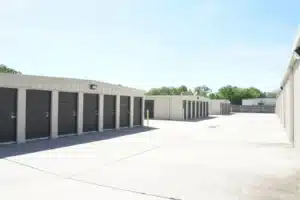
This is a guide to musician storage in Tulsa, OK, for working bands, solo artists, and anyone with more gear than space. It covers what belongs in a unit and what doesn’t, how to care for amps, speakers, and wooden instruments, how to size a unit for a real backline, and how to share one without ruining a friendship.
A City Built on Garages, Basements, and Practice Rooms
Tulsa has a larger-than-life music legacy. In the 1930s and ’40s, Bob Wills and the Texas Playboys played and broadcast from Cain’s, and in the 1970s Leon Russell’s Shelter Records turned an old church into a recording studio. Clubs around town keep the live scene going today.
None of that happens without gear, and a lot of that gear spends its off nights in places never designed for it. Garages run from freezing to sweltering, spare rooms catch everything else, and basements get damp.
Renting a unit doesn’t make a band better. It does give the equipment a secure base, clear up space where people actually live, and make it easier to see what you own. That last part is enough to justify the rent for many bands.
Which Gear Earns a Spot in Storage
The easiest method is to sort gear by how often it moves:
- Weekly gear: Stays close to your rehearsal space.
- Every-gig gear: Rides in the van.
- Everything else: That’s the storage inventory.
The rest of that pile typically includes backup amps and cabinets, a second drum kit, road cases that aren’t in rotation, lighting and stage dressing, merchandise stock, and the nest of cables nobody wants to untangle in July. It also includes instruments you love but rarely play, like an old bass or a baritone guitar.
The best candidates have two traits: they’re worth protecting, and they’re big enough to be a nuisance. A box of strings can live in a closet. A 4×12 cabinet that takes two people to lift really can’t.
How Should a Tulsa Band Store Amplifiers and Stage Equipment Between Shows?
Each piece of equipment fails in a different way in storage. When you know the weak point of each item, packing gets easy.
Amps and Cabinets
Good amp storage in Tulsa starts with a few basics. Dust the chassis, make sure everything is dry, and set amps on a pallet or low platform, never directly on the floor. Cover them with breathable fabric instead of plastic film, which traps moisture against the grille cloth and tolex.
Tube amps need a little extra care. Leave tubes seated unless a technician tells you otherwise, and never fire one up without a speaker connected. After months in storage, let it warm up in standby first and don’t crank it right away. If it has been sitting for years, have a tech check it before powering it on.
Cabinets are the heavy part. Keep them on their backs or stacked against a wall with moving blankets between them, and limit stack height so the bottom cabinet isn’t carrying too much weight on its corners.
Speakers and PA Gear
Speakers are more durable than most people think, with one big exception: foam surrounds deteriorate with age whether the speaker is played or stored. They commonly start to break down ten to twenty years or more after manufacture, and a gentle press on the surround will show whether it’s cracked or crumbling, in which case it needs replacing.
Bring speakers back into use slowly after a long break. Play at low volume and gradually increase it over several days, and if something sounds wrong, stop. Store PA cabinets with their corners protected, and keep powered speakers and mixers dry and covered.
Guitars, Basses, and Anything Wooden
Wood moves with moisture, and that’s the real reason musicians worry about climate. Many acoustic guitar manufacturers recommend a relative humidity between 45 and 55 percent, and a low-cost digital hygrometer inside the case will tell you where you stand. Humidity packets typically last a few months before they harden and need replacing.
The easiest rule is to keep every instrument in its case with a hygrometer, and to treat a hard case as a small climate zone. If a guitar is going to sit for months, that’s when a conditioned unit pays off most. Ask the office what those spaces actually maintain, because a label isn’t a promise.
Cables, Pedals, and the Stage Rig
The weakest part of a rig is the one that seems least significant. Cables get crushed, power supplies get lost, and pedalboards that took a weekend to wire end up in a pile of loose parts. Treat the setup as a system:
- Label snakes and extension cords by length.
- Keep pedalboards together with their power supplies.
- Coil cords loosely and tie them with reusable ties.
- Keep a printout of the stage plot and input list in the same case, so anyone can build the rig without calling the person who set it up.
Do Amps and Speakers Need Climate-Controlled Storage in Oklahoma?
Sometimes, and the honest answer depends on the gear and the timeline. A solid-state amp sitting a couple of weeks between tours isn’t going to be harmed by a standard unit. A vintage tube amp, an acoustic guitar, or a collection of speakers headed for a long hibernation is a different story.
The risks come from things that move or age: wooden cabinets and necks that shrink and swell, glue and vinyl that loosen with heat, electronics that collect moisture, and paper or foam parts that deteriorate. Oklahoma has extreme seasons, and an unconditioned space follows those extremes.
A good guideline is to use climate-controlled storage in Tulsa, OK, for valuable gear, wood, and equipment that will sit for an extended time, and standard storage for durable equipment that rotates back out within a relatively short period. Click Storage’s climate-controlled storage in Tulsa is the place to ask what that option actually delivers.
Tour Inventory: Merch, Spares, and the Money in the Boxes
The gear gets the attention, but a touring band’s inventory is also a small retail business. Shirts, vinyl, CDs, stickers, posters, and hats are all money sitting in cardboard.
Shirts store well in sealed bins that keep out dust and odors, and vinyl stores best upright, not in flat stacks. Keep a basic log of what goes out and what comes back, since merch tends to disappear in small amounts that only get noticed when the cash is a hundred dollars short.
The same habit works for spares. Strings, drumheads, fuses, cables, and replacement tubes are cheap individually and a disaster to lack at a load-in. Keep them all in one labeled container, so the answer to “does anyone have a spare?” is always “yes.”
If your inventory sprawls beyond music, the broader ideas in specialized collection storage in Tulsa apply to guitars, memorabilia, and rare records. And for the electronics side, the basics in how to store electronics in a storage unit without damage are worth a read.
Road Cases, Dollies, and the Weight Problem
A cabinet that’s easy to carry across a stage is a different animal at the end of a long night. Most injuries and most dings happen in the same stretch: between the van and the unit door.
Wheeled road cases solve many of those problems. Use heavy-duty cases with casters for heavy items, and use a four-wheel dolly for cabinets that don’t have them. A few ratchet straps in the unit help a stack move without tipping. Foam-lined cases also protect gear from its neighbors, which matters once the unit gets crowded.
Label both sides of each case with the band name and a brief description, so you can find the snare case without opening six lids. A strip of colored tape works as a quick code: red for drums, blue for guitar, green for PA.
Keeping the Unit Secure and the Gear Accounted For
Gear is easy to resell, which makes a unit full of instruments an appealing target. Use a hard-to-cut lock, make sure the door area is well lit, and ask how the office handles gate access, cameras, and visitors.
Your own paperwork matters just as much. Take a picture of each piece, record the serial number, and keep the list in a shared folder separate from the unit. If something ever goes missing, that list speeds up a claim and helps recover the item if it turns up in a pawn shop.
Check which items the facility doesn’t allow, too. Typical candidates for restriction include fuel for generators, some batteries, and flammable cleaners, so check with the office before packing anything unexpected.
Load-In, Load-Out: Arranging a Unit Around Your Gig Schedule
Most people arrange storage like a closet. Bands should set it up like a stage. Think about the order gear comes out of the unit for a typical show, and load it in reverse.
The first things out, like PA and drum gear, go close to the door. The last things needed, including merch tables and spare cases, go to the rear. Leave a clear aisle wide enough to roll a dolly through, because carrying a cabinet down a cramped path is how backs and cabinets both get damaged.
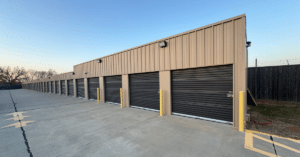
Access hours matter more than for most renters. A gig that ends at midnight doesn’t wait for a gate to open, so check your actual load-out times against the facility’s hours before booking a unit, and ask whether a drive-up space is available so you can park the van at the door.
Sizing a Unit Around the Band
There’s no perfect size, but a backline is easy to count. List every case, cabinet, and stand you plan to store, and picture how they’d fit with an aisle.
- 5×5: Holds guitar cases, pedalboards, and a few bins of small gear.
- 5×10: Fits a couple of amps, some road cases, and merch and spares.
- 10×10: Suits a full backline of drums, cabinets, and a PA.
- 10×15 or larger: Works for bands with lighting, multiple kits, or growing merch.
These are rough estimates, not guarantees. Take your list to a real unit and picture the stacking before you commit, using our storage size guide as a starting point. A unit that’s slightly too big costs a little more each month, while one that’s too small ends with gear stacked on top of other gear.
Splitting a Unit Among Bandmates
Shared storage works beautifully until somebody leaves. A band that splits the rent four ways should decide beforehand who is on the account, who has the keys, and what happens if a member leaves or the band breaks up.
A short written list helps more than a vague handshake. Write down who owns each cabinet, who paid for the PA, and what stays with the band if the lineup changes. It’s a boring conversation to have, and it prevents a very loud one later.
Choosing a Spot in Tulsa
The unit’s location influences how often you use it. A space near your rehearsal room becomes an extension of the stage. One across town turns into a place you visit with dread. Time the drive from your practice space and compare it to the venues you drive to most often.
The Tulsa location is worth a visit if it fits that map. If you’re comparing band equipment storage options in Oklahoma more broadly, the questions to ask are the same: how it handles temperature, how access works, and whether the space can grow with your gear.
Most bands don’t think about storage until the garage is full, which is a lot like most bands not thinking about tuning until the first song. A little structure now, and the gear will be ready when the gig comes around, and the people who live with you may finally get their garage back.
FAQs
Can we rehearse or record inside the unit?
Almost certainly not. Most storage facilities have rules about noise, business use, and extended hours, so check with the office first. Most bands keep a separate rehearsal room and store only the items that aren’t in rotation.
Should amps stay plugged in or powered on in storage?
No. Unplug all equipment, store power cords inside the unit with the amp, and don’t run equipment in the unit. After bringing gear out, let it settle and check it before turning it on.
How often should we check on stored gear?
Every month or two is a good rhythm for valuable equipment, and more often for wooden instruments. A quick visit to check the hygrometer, look for dampness or pests, and confirm everything is where you left it can catch problems while they’re still small.
Do we need to remove tubes before storing a tube amp?
Usually not. Most techs prefer the tubes stay in place, since removing them can lead to bent pins and lost parts. When packing the amp, keep it upright, cushion the glass against impact, and consult a technician if the amp is old, valuable, or won’t be used for years.