| Coverage Type | Typical Limit | What’s Covered |
|---|---|---|
| Homeowner’s policy | 10% of personal property limit | Named perils only (fire, theft, vandalism) |
| Renter’s insurance | Smaller base limit, same 10% rule | Named perils only |
| Facility protection plan | $10–25/mo, usually capped per item | Named perils, read the fine print |
| Standalone storage insurance | $10–30/mo, often all-risk | Broadest coverage available |
What Your Homeowner’s Policy Actually Covers
Most standard homeowner’s policies include some coverage for personal property stored outside your home — but it’s limited. If your policy covers $150,000 in personal property (a typical amount), your off-premises coverage is usually capped at 10% of that. That’s $15,000 maximum coverage.
Sounds like enough until you count what you’ve stored. Furniture adds up fast. A living room set is $4,000. A bedroom set is $3,000. Electronics, tools, and boxes of household items push you past $15,000 easily.
Even worse, that 10% limit typically applies to specific categories. Firearms, jewelry, and valuable electronics often have separate lower limits. A renter’s policy works the same way, except the base limit is usually lower to begin with.
The Named Perils Problem
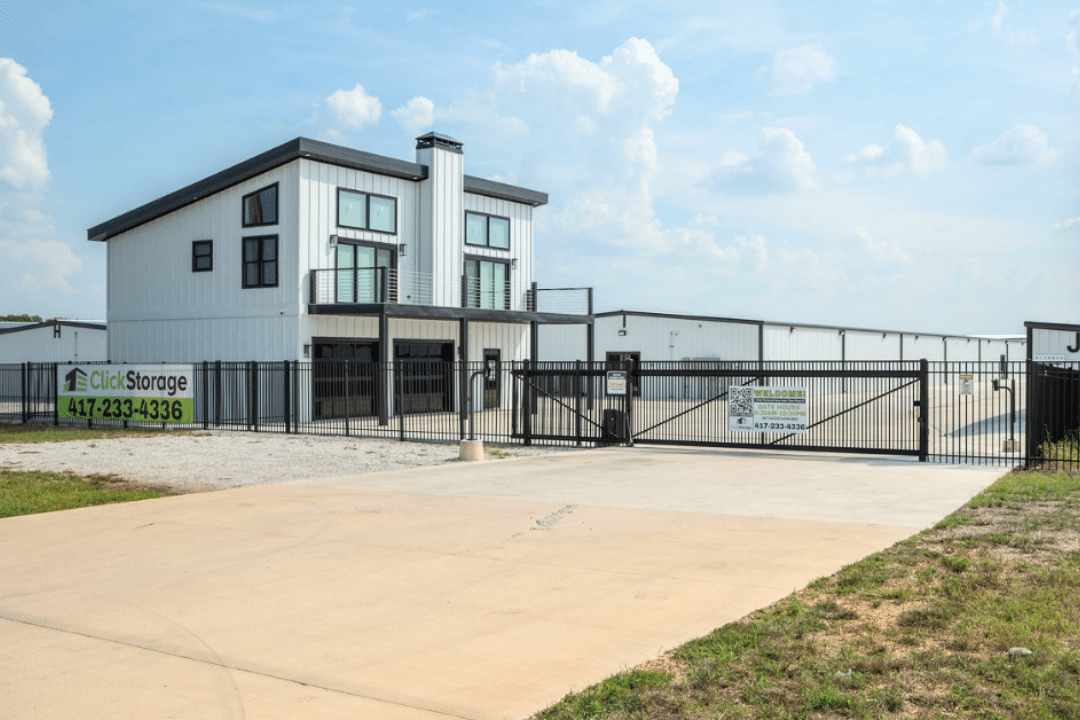
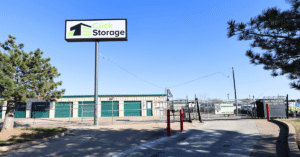
Click Storage — know your coverage before you store
Most homeowner’s policies cover off-premises storage only under “named perils.” That means they cover fire, theft, vandalism, and a few other specific things — but they don’t cover water damage from a burst pipe, mold, heat damage to electronics, or damage from temperature swings.
In Oklahoma, where storage units go from 50°F in winter to 130°F in summer without climate control, that heat damage gap matters. A storage facility’s air conditioning failing in July and baking your furniture for a week? That’s likely not covered under your homeowner’s policy because it’s not a named peril.
Water damage from condensation building up in a non-climate-controlled unit? Also not typically covered.
Option 1: Rely on Your Existing Policy
If you’re storing basics for a few months and the total value is under your off-premises limit, this can work. Call your insurance agent and ask these exact questions:
- What is my off-premises personal property coverage limit?
- Does it include water damage, flood, or temperature damage?
- What is the per-item limit?
- Do firearms or jewelry have separate limits?
If your furniture is worth $8,000 and they cover $15,000 in off-premises property, you’re fine. If your furniture is worth $20,000, you’re not. The downside: filing a claim through your homeowner’s policy means a deductible ($500 to $1,500 typically) and potential rate increases.
Option 2: The Storage Facility’s Protection Plan
When you rent a storage unit at Click Storage, you can add a protection plan for an additional monthly fee — typically $10 to $25 depending on unit size. These plans are specifically designed for storage and easy to add at checkout when you reserve online.
Most facility plans are “named peril” coverage: fire, theft, vandalism, and weather-related damage. They usually have a per-item limit ($1,000 or $2,500 is common) and require you to document what you’re storing with photos or a detailed list.
Read the fine print. Does it cover water damage? Temperature damage? Some plans exclude jewelry, firearms, or high-value items entirely. The advantage: it’s easy, affordable, and specifically designed for storage. The disadvantage: it’s often limited coverage.
Option 3: Standalone Storage Insurance
A few companies specialize in storage-only insurance. You pay a separate policy — typically $10 to $30 per month — and they cover your stored items. Some offer all-risk coverage instead of named perils only, which means fewer gaps.
This is the most expensive option but also the most comprehensive. If you’re storing high-value items or storing long-term, it’s worth considering. You can usually add coverage for specific categories like jewelry, electronics, or fine art that homeowner’s policies limit.
What You Should Actually Do
Step 1: Call your homeowner’s or renter’s insurance agent. Ask exactly what your off-premises coverage limit is, whether it covers heat or water damage, and what the per-item limits are.
Step 2: Make a realistic inventory of what you’re storing. Add it up honestly.
Step 3: Compare your coverage limit to your inventory value. If you’re over the limit or storing items that aren’t well covered by named perils, get additional protection.
Step 4: If the storage facility offers a protection plan, read the details and check if it fills the gaps your homeowner’s policy leaves.
Most South Tulsa homeowners end up getting the facility’s protection plan. It’s affordable and covers the gaps that homeowner’s policies leave. The worst-case scenario isn’t paying an extra $15 a month for protection — it’s losing $5,000 worth of furniture because coverage didn’t apply and discovering too late that the limit was lower than you thought.
Ready to Reserve Your Click Storage Unit?
No long-term contracts. Reserve online in minutes. Add a protection plan at checkout for complete peace of mind.
- Reserve Your Unit: https://click4storage.com/locations/
- Contact Us: https://click4storage.com/get-in-touch/
Q&A: Storage Unit Insurance and Protection Plans
Tap any card to reveal the answer.
Question 01Does my homeowner’s insurance automatically cover my storage unit?
Yes, but with limits. Most policies cover 10% of your personal property limit for off-premises storage, and only under named perils like fire or theft. You need to verify the actual limit and what’s covered.
Question 02What if I rent instead of own?
Renter’s insurance works the same way. It includes some off-premises coverage, but it is usually limited and subject to the same named-peril restrictions. Call your agent to confirm your specific limit.
Question 03Why doesn’t the storage facility provide free insurance?
Facilities are not responsible for theft or damage unless it is due to their negligence. The protection plans they offer are optional add-ons because the legal liability is on you as the renter.
Question 04If the storage facility has cameras and security, shouldn’t they cover theft?
Security cameras document what happened, but they do not make the facility liable. A storage rental agreement typically states the facility is not responsible for loss or damage. That’s why you need your own insurance.
Question 05Can I get storage insurance if I don’t own the storage unit?
Yes. Standalone storage insurance and facility protection plans do not require you to own the unit. You just need to be the renter.
Question 06What is a named perils policy?
A named perils policy covers only the specific events listed, typically fire, theft, and vandalism. It does not cover heat damage, flooding, mold, or other events not explicitly named. This matters in Oklahoma, where heat and humidity are major risks.
Question 07How do I know if my stored items are worth insuring?
Add up the replacement value of everything you’re storing. If it exceeds your off-premises coverage limit or includes items not covered by named perils, you need additional protection.
Question 08What’s the easiest way to add coverage for my storage unit?
The storage facility’s protection plan is the simplest option. It is added at checkout when you reserve your unit online and typically costs $10-$25 per month depending on coverage level.
Question 09Does the facility protection plan cover mold damage in Oklahoma?
Read the fine print. Most named-peril plans do not cover mold or heat damage. This is a significant gap in Oklahoma, where humidity and heat are real risks. Standalone all-risk insurance may be better if this concerns you.
Question 10What documents do I need to file a storage insurance claim?
You’ll need an inventory of what was stored, photos of the damage, documentation of the items’ value, and the incident report from the storage facility. Take photos of your unit contents when you move in.
Question 11Should I photograph my stored items for insurance purposes?
Yes, always. Photograph your items before storage, maintain a written inventory with estimated values, and store the documentation in cloud storage, not inside your storage unit.
Question 12How do storage protection plan limits work per item?
Most facility plans have a per-item limit of $1,000-$2,500. If you’re storing a $3,000 antique, only part of it may be covered. Standalone insurance often allows you to add coverage for specific high-value items.