
How to Pack a Storage Unit Like a Pro (With a Checklist You Can Actually Use)
The biggest mistake people make when loading a storage unit is the same every single time: they load the big stuff last.
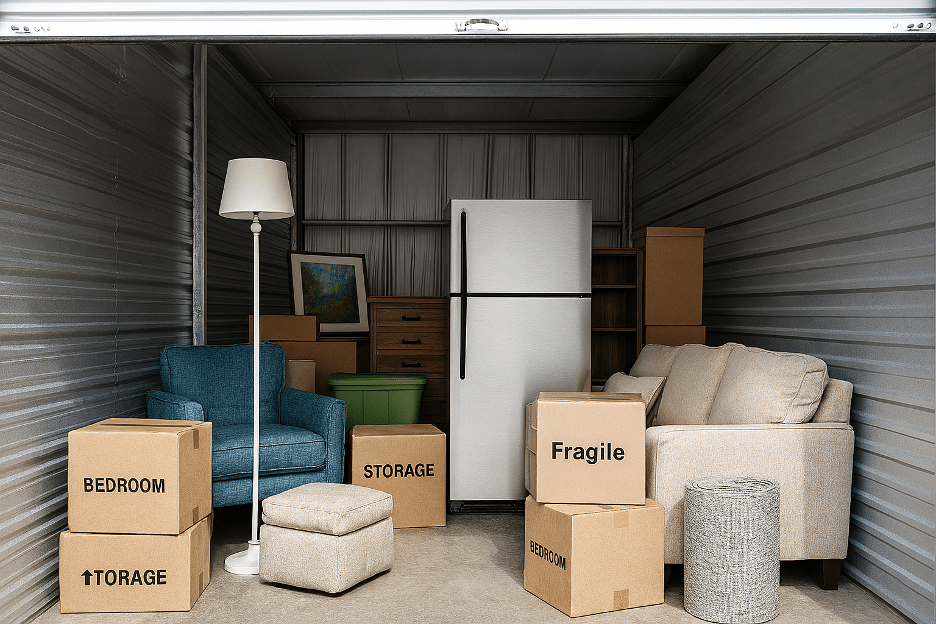
| Loading Step | What to Do | Where |
|---|---|---|
| Step 1: Plan layout | Walk the empty unit. Mark your center aisle. Decide zones. | Before loading |
| Step 2: Furniture | Large pieces go to the back and walls first | Back & sides |
| Step 3: Vertical space | Set up metal shelving. Stack to ceiling. | Interior |
| Step 4: Boxes & totes | Heavy on lower shelves, light on top. Labels facing aisle. | On shelves |
| Step 5: Fragile items | Wrapped, on higher shelves, not buried under weight | Upper shelves |
| Step 6: Aisle | Keep center aisle clear from door to back wall — always | Door to back |
The #1 Mistake: Loading Big First is Backwards
Here’s what most people do: they load their pickup truck with the biggest items, so they unload the biggest items first. Couch goes in. Bed frame goes in. Dresser goes in. Then they’re standing in a storage unit looking at a pile of boxes and realizing everything they need to access is now buried.
This is the opposite of how you should organize a storage unit.
The furniture goes in first, but strategically — not at the door, at the back. And not randomly, but following a specific loading order that leaves everything accessible.
If you’re a Broken Arrow or Bixby resident moving a full four-bedroom house into a 10×15 unit, or anyone dealing with a serious furniture load, this is the difference between organized and chaos.
The Right Way to Pack a Storage Unit

Step 1: Plan the Layout Before You Load Anything
Walk into the empty unit. You’re not loading yet — you’re thinking. Imagine a line down the middle. That’s your walking aisle. Everything in the unit will be organized so you can walk straight to the back without moving pieces.
Step 2: Furniture Goes in First, at the Back
Load all large furniture — bed frames, dressers, couches, dining tables — at the back and sides of the unit, leaving the front open. Lean dressers against the back wall. Stand bed frames upright if they fit. A mattress can lean against the wall behind the furniture.
Step 3: Use Vertical Space Ruthlessly
Bring metal shelving units ($30–80). Stack plastic bins on the shelves. Stack small furniture on top of other small furniture. Use the full height of the unit. Empty dressers? Stack boxes inside them. Use every cubic inch.
Step 4: Boxes and Totes Go on Top
Only after furniture and shelving are in place do you load boxes, bins, and loose items. Heavy boxes on lower shelves, lighter boxes higher. Arrange boxes so you can read the labels without moving anything — labels always facing the aisle.
Step 5: Smaller Items and Fragile Stuff Last
Picture frames, lamps, kitchen small appliances. These go on top of tote stacks or special shelves where they won’t get crushed. Fragile items like mirrors and glassware go wrapped on higher shelves, never buried under heavy boxes.
Step 6: The Door Aisle Stays Clear
Everything stays organized so from the unit door, you can see straight to the back. You can walk in and move around. You can access anything without moving something else first. This is non-negotiable.
Short-Term vs. Long-Term Packing Strategy
Short-term storage (under 3 months): You’ll probably need to access stuff. Stack items so they’re retrievable. Label boxes on the side facing the aisle. Leave extra space to move around.
Long-term storage (6+ months): Optimize for space, not access. Stack tighter. Use every inch. You probably won’t be opening boxes to grab things mid-storage. One good organization session and leave it alone until pickup.
Short-term is organized for retrieval. Long-term is maximized for density. Know which one you’re doing before you start loading.
The Game-Changer: Drive-Up Access
If your facility has drive-up access (like Click Storage locations), you can drive right up to the door and hand items through rather than carrying everything from a distant parking lot. This changes what’s practical to load and where you put heavy items.
With drive-up access, you can stack heavier items farther from the door because you’re not physically carrying them as far. Use this advantage — it makes a half-day job into a two-hour job.
Real Packing Checklist You Can Actually Use
Before you load — gather these:
- Clear or see-through totes (contents obvious without opening)
- Permanent marker for labeling
- Metal shelving unit (2–3 shelves minimum)
- Moving blankets or plastic sheeting (protects furniture)
- Dolly or hand truck (for heavy furniture and boxes)
- Work gloves
- Measuring tape
- Plastic wrap (protects couches and chairs from dust)
- Tape gun and packing tape
Loading checklist:
- Plan your layout before loading anything
- Load large furniture first, at the back
- Position furniture against walls, leaving the middle aisle clear
- Set up shelving units
- Stack boxes on shelves, heaviest at bottom
- Label boxes on the side facing the aisle
- Keep the door aisle completely clear
- Store fragile items on higher shelves
- Take a photo of your organized unit for your own records
- Verify you can walk from door to back without moving anything
Organizing Different Types of Items
Furniture: Back corners and along walls. Use moving blankets to prevent scratches. Upright whenever possible.
Boxes: Shelves, stacked logically. Related boxes grouped together. Heavy boxes lower, light boxes higher.
Seasonal items: Higher shelves if they won’t be accessed soon. Lower and more accessible if you’ll need them in a few months.
Tools and equipment: Shelving or cabinets. Smaller tools in boxes so you can find them.
Electronics: Shelves or boxes where they won’t get crushed. Cords labeled and organized. Climate-controlled units to prevent heat damage.
Clothing: Hanging racks if you have them, or bins with labels. Vacuum-seal bags take up less space for off-season clothes.
Sentimental items: Boxes clearly labeled. Positioned so they’re not buried under heavy items.
Sources: U.S. Self-Storage Association · Oklahoma Climatological Survey · Click Storage facility data, April 2026
Ready to Reserve Your Click Storage Unit?
No long-term contracts. Reserve online in minutes. Month-to-month flexibility at South Tulsa and Oklahoma locations.