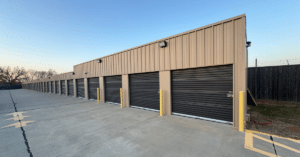
A donation drive has a strange shape. Everything shows up in a hurry during the first few weeks, and then the people who need it arrive one household at a time over the next six months. The collection barrels fill on the drive’s schedule, the shelves empty on the clients’ schedule, and the space between those two schedules is where a surprising number of good intentions get lost.
Broken Arrow is a good place to see this play out. It’s Tulsa’s largest suburb, and it has grown from just over 11,000 residents in 1970 to more than 113,000 at the 2020 census. More people means more neighbors who give, more neighbors who need help, and more churches, schools, and civic groups running drives that land on the same few volunteers.
This guide to food pantry storage in Broken Arrow, OK, is about the logistics around the giving. It covers what can and can’t go in a rented unit, how to keep excess inventory from going to waste, who should hold the keys, and what records a drive should keep.
A Wave Going In, a Trickle Going Out
Think of a drive as a reservoir. The water rushes in for a short time, then takes months for downstream demand to clear it out. Trouble starts when the reservoir has nowhere to rest:
- Boxes pile up in a church hall and block a fire exit before the drive is even over.
- A volunteer’s garage becomes an unofficial warehouse, and then the volunteer moves or gets busy.
- Items that arrived in October are still in the corner in March, and nobody remembers which ones are past their dates.
- The pantry can’t accept a second drive because the first one hasn’t cleared.
A rented space solves one problem in particular: it gives the reservoir a place to rest that isn’t in anyone’s way. That’s the real power of nonprofit donation storage in Broken Arrow, and it’s also why the space needs rules.
What Belongs in a Storage Unit, and What Doesn’t
This is where honesty matters most. Self-storage is not a pantry, and storing food in a unit can create food safety problems and violate your rental agreement. Before moving anything, sort what a drive collects into three groups.
Goods That Do Well in a Unit
Non-food essentials are the easiest case. They don’t spoil, they don’t attract the same pests, and they tend to arrive in large numbers during seasonal drives.
- Diapers, wipes, and hygiene products
- Blankets, coats, hats, and gloves
- School supplies and backpacks
- Toys and gifts collected for holiday programs
- Collection barrels, banners, signs, tables, and wagons
The last item is the one organizations overlook. Campaign supply storage in Broken Arrow, OK, is a category of its own, and the barrels and banners that make a drive visible need a home for the other ten months of the year.
Shelf-Stable Food: Possible, With Care
The gray area is canned goods, rice, pasta, and other dry foods. University extension food-safety guidance commonly recommends storing dry food at 50 to 70°F, never above 85°F, and at least six inches off the floor and away from the walls.
A standard unit isn’t built around that standard, so it’s worth asking whether the facility offers a climate-controlled option and, more importantly, whether it permits food storage at all. Many facilities restrict it because of pests. Get the answer in writing, and consider the unit for short holding periods, not as the pantry’s main shelving.
What Should Never Go in a Unit
Some items should never go off-site at all. That includes fresh produce, dairy, eggs, and meat that need refrigeration or freezing. It also includes infant formula, which has strict dating requirements, along with medications and anything else that needs temperature control.
Those belong with a partner that has proper cold storage, which usually means a regional food bank or a church kitchen with commercial equipment. The Food Bank of Eastern Oklahoma works with a large network of pantries and feeding programs and offers a tool for finding local partners by town or ZIP code.
How Should a Food Pantry in Broken Arrow Manage Overflow Donated Inventory?
Overflow is the difference between a well-run pantry and a struggling one. The principle is simple: nothing should sit long enough to become a problem, and anything that does should be easy to spot.
- First in, first out (FIFO): Put the earliest dates at the front so they go first, and mark shelves clearly so volunteers follow the pattern.
- Be careful with dates: The same extension guidance notes that “Best if Used By” and similar dates are meant to indicate quality, and that infant formula past its date should not be accepted or distributed.
- Reject damaged goods at the door: Say no to rust, dents, bulging lids, leaks, tears, or water stains.
- Set up a quarantine area: Anything uncertain goes somewhere visible, so it doesn’t drift back onto the shelf.
- Check for pests often: Remove damaged materials promptly.
Overflow should move in a loop. Stock goes onto pantry shelves as space opens up, and the unit gets checked every time someone accesses it. If the unit only receives and never ships, it’s a storage problem.
Where Can Nonprofits Store Drive Collections in Broken Arrow?
Most groups start with what’s free and readily available, and each option carries a hidden cost that only shows up when it stops working:
- A church or school storage room: It’s convenient, but it competes with the building’s own needs and often has no climate control.
- A volunteer’s garage: It’s free, but it ties your inventory to one person’s schedule and one person’s home.
- A donated corner in a warehouse: It’s a nice gesture, but it could be gone the day the owner needs the space.
- A rented unit: It’s an expense, but the organization owns the arrangement, access is clear, and charity inventory stays separate from anyone’s personal storage.
A rented unit makes the most sense when you run more than one drive a year, when donations arrive faster than you can distribute them, or when you’ve lost track of what you own. Organizations like these are typically set up through Click Storage’s business storage, and the Broken Arrow location can explain sizes and access.
When Donors Bring the Wrong Things
Some drives end with a few surprises: a box of expired soup, a bag of unwashed clothes, a broken lamp left by the barrel in the lobby. Well-meaning people give what’s convenient, and the cost of sorting it lands on volunteers.
The best fix is to state what you want before anyone arrives. A short list of what you need on the flyer, plus a plain note about what you can’t accept, saves hours later. It also keeps your food pantry storage in Broken Arrow, OK, from filling up with products that never reach a client.
- List the top three or four things you need most, with a quantity for each.
- Name the items you can’t take: opened packages, anything past its expiration date, and homemade items.
- Offer a drop-off window with a person present, instead of leaving barrels unattended.
Plan ahead for the rejects too. A charity partner that accepts clothing, or a trash and recycling plan, keeps the unit from becoming the place unwanted donations go to wait.
Whose Name Is on the Unit?
This sounds like a purely administrative question, but it matters. If a volunteer leases the unit personally and then leaves the organization, the group may be unable to claim what’s inside or even get in. When the unit is rented in the nonprofit’s name, the keys and the account stay with the nonprofit no matter who’s handling the unit.
Ask the facility how it sets up accounts for organizations, and whether more than one person can be listed as authorized. Then put the answer in writing inside the organization too, so a new board member isn’t guessing.
Access Is the Real Problem
Most storage plans fail on access, not space. Volunteers have jobs and weekend commitments, and the one person who knows where everything is always seems to be out of town the day you need it.
Chain of Custody
Borrow an idea from warehouses and treat the unit as a place where every item has a path:
- Use a sign-in sheet or shared log that records who went in, when, and what they moved.
- Never send one person in alone when the unit holds high-value items like gift cards or electronics.
- Name a specific coordinator as owner of the unit, and choose a backup before the busy season begins.
- Change or collect codes and keys whenever volunteers leave.
Hours and Handoffs
Before you schedule volunteers, ask the facility about access hours, since a volunteer shift that runs to 7 p.m. is worthless if the gate closes at 6. Drive-up access also matters when the cargo is forty cases of diapers and a volunteer with a bad back.
The best systems plan handoffs on purpose. Pickup day, sorting day, and distribution day each have a named lead, and each lead signs off before the next one starts.
The Records a Drive Should Keep
Donated items generate paperwork, and proper storage makes that paperwork easier. IRS Publication 1771 indicates that a written acknowledgment should be prepared for gifts of $250 or more, including the organization’s name, a description of the noncash contribution (without a value), and a statement about whether any goods or services were received in return.
Many volunteers get that one wrong. The charity describes noncash gifts but doesn’t assign them a dollar figure, so a donor of fifty boxes of cereal gets a receipt that says what was given, not what it was worth.
For storage purposes, the practical habit is a simple intake log: who donated, what they gave, how many, when it arrived, and where it went. When someone asks about a donation six months later, you’ll be able to answer. This is general information, not tax advice, so check with your own accountant about your situation.
Plan the Drive Backward From Distribution Day
Most groups plan drives forward, starting with the launch and hoping the rest works out. Reverse planning puts storage at the table first.
Begin with distribution day and ask how much space the organization can reasonably handle at that point. Back up to sorting day and work out how many volunteers and hours the incoming volume will need. Set the collection end date so sorting can happen before the shelves need to be full. Then choose the launch date and the collection target, based on the space and labor you actually have.
A drive that sets its goal first and finds storage afterward tends to either overshoot and waste donations or undershoot because nobody had room to say yes.
Closing Out a Drive
The weeks after a drive are when storage turns into either a system or a mess. It comes down to a short closing routine:
- Count what came into the unit against the intake log and record the totals.
- Move what’s needed now to the pantry shelves, and record what’s left in the unit.
- Send thank-you notes while the drive is still fresh, along with any written acknowledgments donors may need.
- Reset the unit by collapsing barrels, storing banners, and walking the space for anything forgotten.
The best food pantry storage plan puts the next drive’s date on the calendar, then sets up the unit before that date.
Matching Space to the Campaign
Size varies with the type of collection and how often you run drives. Treat these as rough starting points, and walk through a real unit before you decide, using our storage size guide for reference.
- 5×5: Handles banners, barrels, and a small seasonal drive of non-food essentials.
- 5×10: Suits medium hygiene or coat drives, with room for an aisle.
- 10×10 or larger: Works for groups running multiple drives each year or collecting large volumes of toys, blankets, and similar items.
Costs deserve a plain conversation too. Some facilities may offer nonprofit options and some may not, so it’s fair to ask. If you’re comparing options across the region, our guide to affordable storage solutions for small businesses and organizations is a useful companion read.
Treat storage as a line item in the campaign budget, next to flyers and printing, not as an afterthought.
Whatever your next drive looks like, start with the question of where it will sit on day one. A small unit set up with a log, a coordinator, and a clear list of what’s allowed can turn a pile of donations into a system. The Broken Arrow location is a good place to ask how it would work for your group.
FAQs
Can we keep coat or toy drive items in storage for months?
Yes, as long as they’re clean, dry, and boxed away from dust. Seasonal items like coats and toys are usually the best fit for a unit, since they aren’t perishable and they sit between drives.
Should the unit be in the nonprofit’s name or a volunteer’s name?
The organization’s name is the better option, since the account and keys stay with the group even when volunteers change. Ask the facility about organizational accounts and additional authorized users.
What happens to leftover items after a drive ends?
Decide before the drive starts. A brief written plan keeps leftovers from sitting for years, and they can roll over to the next campaign, go to a partner, or be donated onward.